A website is often the first interaction a potential customer has with your business.
Before contacting you, visiting your office, or purchasing your product, customers are likely to search for your business online. Your website plays an important role in creating a strong first impression.
However, simply having a website is not enough.
A successful business website should be professional, easy to use, fast, secure, and designed to help visitors take action.
Whether your goal is to generate leads, sell products, showcase services, or build brand awareness, your website should support your overall business objectives.
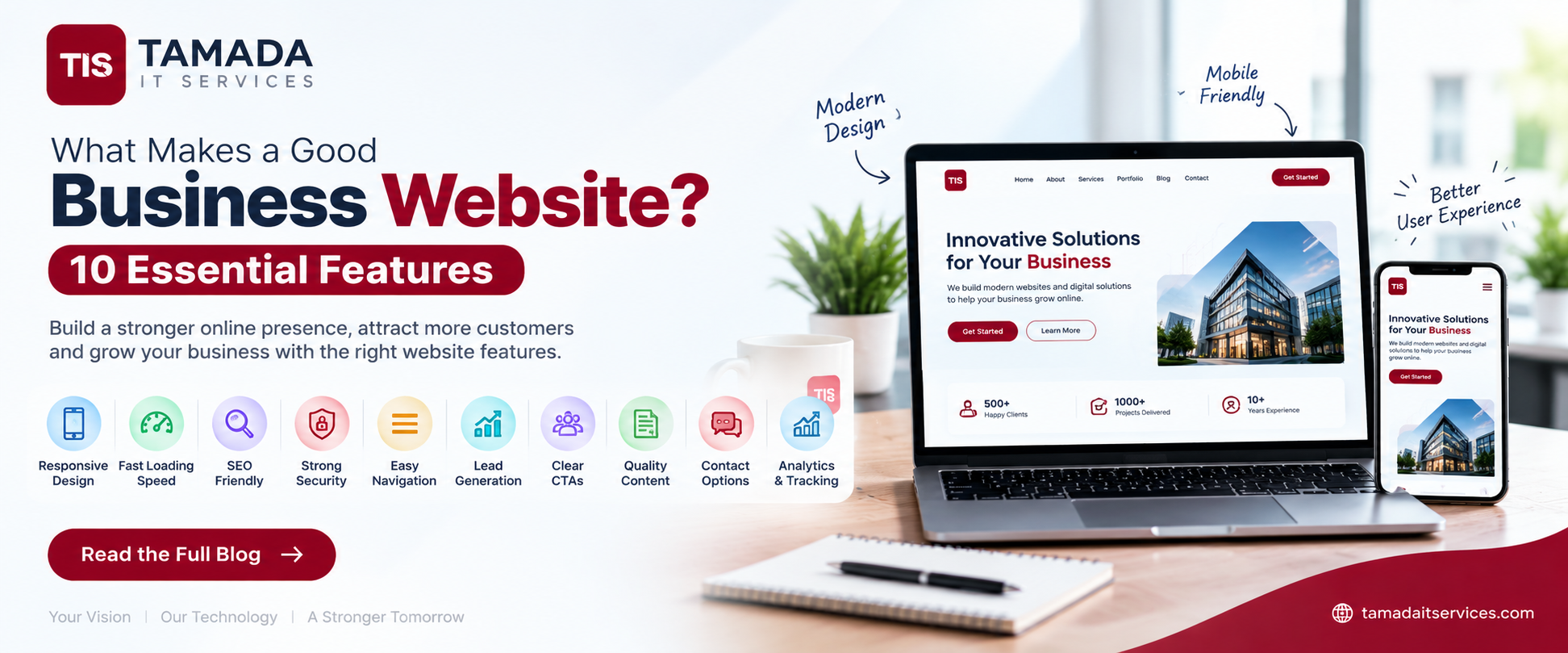
In this article, we will explore the 10 essential features that make a good business website and explain why each one is important.
Why Is a Professional Business Website Important?A professional website can help businesses:
- Build credibility and trust
- Reach more customers
- Generate new leads
- Showcase products and services
- Improve customer communication
- Increase sales opportunities
- Strengthen brand awareness
Your website works for your business 24 hours a day.
Even when your office is closed, potential customers can learn about your company, explore your services, and submit inquiries.
For this reason, investing in a well-designed website is an important part of modern business growth.
1. A Clear and Professional DesignThe first thing visitors notice when they open your website is its design.
A professional website should have a clean and modern appearance that reflects your brand.
Your design should include:
- Consistent colors
- Professional typography
- High-quality images
- Clear navigation
- Proper spacing
- Easy-to-read content
A cluttered or outdated website can make visitors leave quickly.
Keep the Design Simple
A good website does not need unnecessary animations or complicated layouts.
The goal should be to make it easy for visitors to find information.
For example, visitors should quickly understand:
- Who you are
- What your business does
- What services you offer
- How they can contact you
A clear website design creates a better first impression and improves user experience.
2. Mobile-Friendly and Responsive DesignToday, a large number of website visitors access websites using smartphones and tablets.
If your website does not work properly on mobile devices, you may lose potential customers.
A responsive website automatically adjusts its layout based on the screen size.
Your website should work smoothly on:
- Smartphones
- Tablets
- Laptops
- Desktop computers
Why Mobile-Friendly Design Matters
A mobile-friendly website can provide:
- Better user experience
- Easier navigation
- Improved accessibility
- Better engagement
Buttons, menus, forms, and content should be easy to use on smaller screens.
A business website should provide a consistent experience across all devices.
3. Fast Website Loading SpeedWebsite speed is one of the most important factors in user experience.
Visitors generally do not want to wait for a slow website to load.
A slow website can result in:
- Higher bounce rates
- Poor user experience
- Lost leads
- Reduced conversions
How Can Website Speed Be Improved?
Businesses can improve website performance by:
- Optimizing images
- Using quality web hosting
- Reducing unnecessary code
- Using caching
- Optimizing databases
- Minimizing large files
A fast website helps visitors access information quickly and creates a smoother browsing experience.
4. Clear NavigationVisitors should be able to find information easily.
A confusing navigation system can make users frustrated and cause them to leave the website.
A good business website should have a simple menu structure.
Common navigation pages include:
- Home
- About Us
- Services
- Products
- Portfolio
- Blog
- Contact Us
Make Important Information Easy to Find
Your visitors should not have to search through multiple pages to find your services or contact information.
Important pages should be clearly visible in the navigation menu.
A simple navigation structure improves usability and helps visitors explore your website more effectively.
5. Clear Calls-to-Action (CTA)A Call-to-Action encourages visitors to take the next step.
Without clear CTAs, visitors may leave your website without contacting your business.
Examples of CTAs include:
- Contact Us
- Get a Free Consultation
- Request a Quote
- Book a Demo
- Get Started
- Call Now
Where Should You Use CTAs?
CTAs can be placed on:
- Homepage banners
- Service pages
- Blog posts
- Contact pages
- Landing pages
A good CTA should clearly explain what action the visitor should take.
For example:
"Get Your Free Website Consultation"
is more specific and engaging than simply using:
"Click Here."
6. SEO-Friendly Website StructureSearch Engine Optimization (SEO) helps search engines understand your website and content.
An SEO-friendly website can improve your chances of appearing in relevant search results.
Important SEO elements include:
- Proper page titles
- Meta descriptions
- Heading tags
- SEO-friendly URLs
- Internal links
- Image optimization
- Mobile-friendly design
- Fast loading speed
Why SEO Is Important for Businesses
SEO can help businesses attract visitors who are actively searching for products or services.
For example, if someone searches for:
"Website development company in India"
an optimized website has a better opportunity to appear in relevant search results.
SEO should be considered during the website development process, not added only after the website is completed.
7. Strong Website SecurityWebsite security is essential for protecting your business and your customers.
A secure website helps protect:
- Customer information
- Contact form data
- Business information
- User accounts
Important security features may include:
- SSL certificates
- Secure authentication
- Regular software updates
- Strong passwords
- Website backups
- Security monitoring
Why Website Security Builds Trust
Visitors are more likely to trust a website that provides a secure browsing experience.
For businesses collecting customer information or online payments, security should be a major priority.
8. Easy-to-Find Contact InformationPotential customers should be able to contact your business easily.
Your website should clearly display important contact information.
This may include:
- Phone number
- Email address
- Business address
- Contact form
- Social media links
Contact Forms Can Help Generate Leads
A simple contact form allows potential customers to submit inquiries directly from your website.
Avoid asking for unnecessary information.
A basic contact form can include:
- Name
- Email address
- Phone number
- Message
The easier it is to contact your business, the more likely visitors are to take action.
9. High-Quality and Helpful ContentContent plays an important role in building trust with your audience.
Your website should clearly explain:
- Your business
- Your services
- Your products
- Your expertise
- Your solutions
Avoid using complicated language when simple language can explain your services clearly.
Business Blogs Can Improve Your Website
Publishing helpful blog content can provide several benefits.
Blogs can help businesses:
- Educate customers
- Demonstrate expertise
- Improve SEO
- Generate website traffic
- Build trust
For example, an IT services company can publish blogs about:
- Software development
- Mobile app development
- Artificial Intelligence
- Website development
- Business automation
This helps potential customers understand your expertise.
10. Lead Generation and Analytics ToolsA good business website should not only provide information.
It should also help generate business opportunities.
Your website can include lead generation features such as:
- Contact forms
- Quote request forms
- Newsletter forms
- Chatbots
- Appointment booking
- Call-back requests
Track Website Performance
Website analytics can help businesses understand visitor behavior.
Important metrics may include:
- Number of visitors
- Most visited pages
- Traffic sources
- Conversion rates
- User engagement
Analyzing website performance can help businesses identify opportunities for improvement.
Additional Features That Can Improve Your Business WebsiteBeyond the essential features, businesses may consider adding additional functionality based on their requirements.
These may include:
Live Chat
Live chat can help businesses communicate with visitors quickly.
It can be useful for:
- Customer support
- Lead generation
- Product questions
- Service inquiries
Customer Testimonials
Testimonials can help build trust.
Positive feedback from previous customers can demonstrate the quality of your products or services.
Portfolio or Case Studies
A portfolio can help businesses showcase previous work.
This is particularly useful for:
- Software companies
- Design agencies
- Marketing companies
- Construction businesses
- Freelancers
Frequently Asked Questions (FAQ)
An FAQ section can help answer common customer questions.
This can improve the user experience and reduce the number of basic inquiries received by your support team.
Common Mistakes Businesses Make When Creating a WebsiteWhen developing a business website, companies should avoid common mistakes.
1. Too Much Information on One Page
Too much content can overwhelm visitors.
Organize information clearly and use headings to improve readability.
2. Poor Mobile Experience
A website should work properly on smartphones and tablets.
Always test your website across different devices.
3. Slow Website Performance
Large images, unnecessary plugins, and poor hosting can affect website speed.
Performance should be considered throughout the development process.
4. No Clear Call-to-Action
Visitors should understand what to do next.
Every important page should have a clear purpose and relevant CTA.
5. Outdated Website Content
Old information can create a poor impression.
Regularly update:
- Services
- Contact information
- Pricing
- Blog content
- Company information
Before developing a website, businesses should clearly define their goals.
Ask questions such as:
- Who is our target audience?
- What services do we want to promote?
- What action should visitors take?
- Do we need lead generation?
- Do we need e-commerce functionality?
- Do we need integration with other business systems?
Your answers will help determine the structure and features of your website.
Focus on Business Goals
A website should not simply look attractive.
It should support your business objectives.
For example:
Service-Based Business
The website may focus on:
- Lead generation
- Service information
- Contact forms
- Consultation booking
E-Commerce Business
The website may focus on:
- Product discovery
- Online payments
- Order management
- Customer accounts
The right website features depend on your business model.
How Tamada IT Services Can Help Build Your Business WebsiteAt Tamada IT Services, we help businesses build modern, scalable, and user-friendly websites.
Our website development services can include:
- Custom website development
- Responsive web design
- Business websites
- E-commerce websites
- Web applications
- Website redesign
- Website maintenance
- API integration
We focus on building websites that are not only visually appealing but also designed for performance, usability, security, and business growth.
Every business has unique requirements, which is why we work to create solutions based on specific business goals.
Final ThoughtsA good business website is much more than an online brochure.
It is a powerful digital platform that can help businesses build trust, attract customers, generate leads, and grow.
The 10 essential features of a good business website include:
- Professional design
- Mobile-friendly layout
- Fast loading speed
- Clear navigation
- Strong calls-to-action
- SEO-friendly structure
- Website security
- Easy contact options
- High-quality content
- Lead generation and analytics
By focusing on these features, businesses can create a website that provides value to visitors and supports long-term growth.
Ready to Build a Professional Business Website?
Tamada IT Services can help you design and develop a modern website tailored to your business needs.
Whether you need a simple business website, e-commerce platform, or custom web application, the right technology solution can help your business create a stronger online presence.
Build a website that works for your business and helps turn visitors into customers.
Frequently Asked Questions (FAQs)1. What makes a business website successful?
A successful business website should be professional, easy to navigate, mobile-friendly, fast, secure, SEO-friendly, and designed with clear calls-to-action.
2. Why does my small business need a professional website?
A professional website helps small businesses build credibility, reach more customers, showcase services, generate leads, and create a strong online presence.
3. What features should a business website have?
Important features include responsive design, fast loading speed, clear navigation, contact information, SEO optimization, security, high-quality content, and lead generation tools.
4. How often should a business website be updated?
Businesses should regularly update website content, software, security features, and information to ensure the website remains secure and relevant.
5. Can a website help generate leads?
Yes. A website can generate leads using contact forms, quote requests, appointment booking, chatbots, landing pages, and strong calls-to-action.
6. Should I choose a template or custom website?
A template website can be suitable for simple requirements. A custom website is often better for businesses with unique branding, specific functionality, integrations, or scalability requirements.